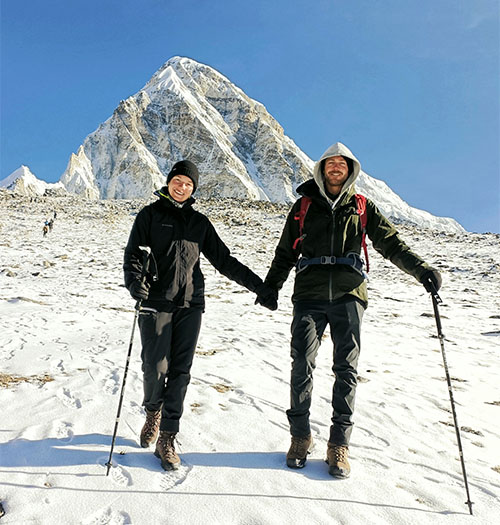
Standing at the foot of Mount Everest is an experience beyond travel. It's less a matter of arriving at a destination on a trek and more of fulfilling an enduring dream in the minds of adventurers. The trek to Everest Base Camp traverses landscapes that vary with every step, from rhododendron forests and suspension bridges far above the floor of the valleys to wind-blasted valleys rimmed by mighty Himalayan peaks. Along the way, the Sherpa hospitality, the sound of prayer wheels, and the flutter of prayer flags remind one that this is as much a matter of culture as adventure.
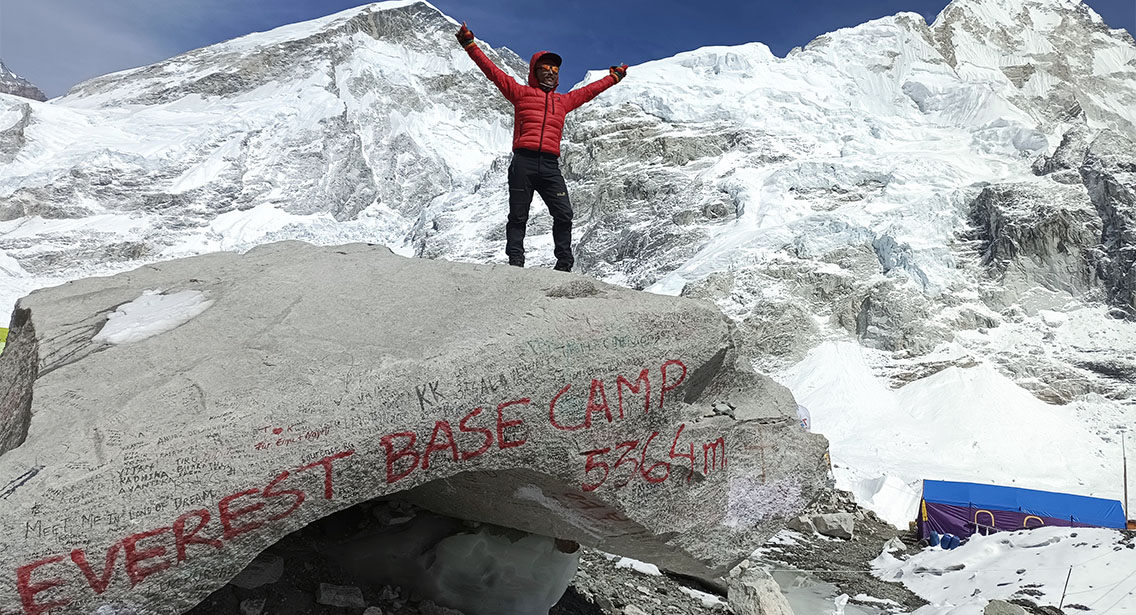
An arrival at Everest Base Camp at 5,364 meters constitutes a victory in itself. Here, at the edge of the Khumbu Icefall, you are where climbers arrive to attempt the summit, burdened with history and the magnetism of the world's highest mountain. The atmosphere is depleted, the land desolate, but the atmosphere is choking in its beauty and importance. To be here is to stretch to the skies with your dreams, and to take with you an experience that will endure forever.
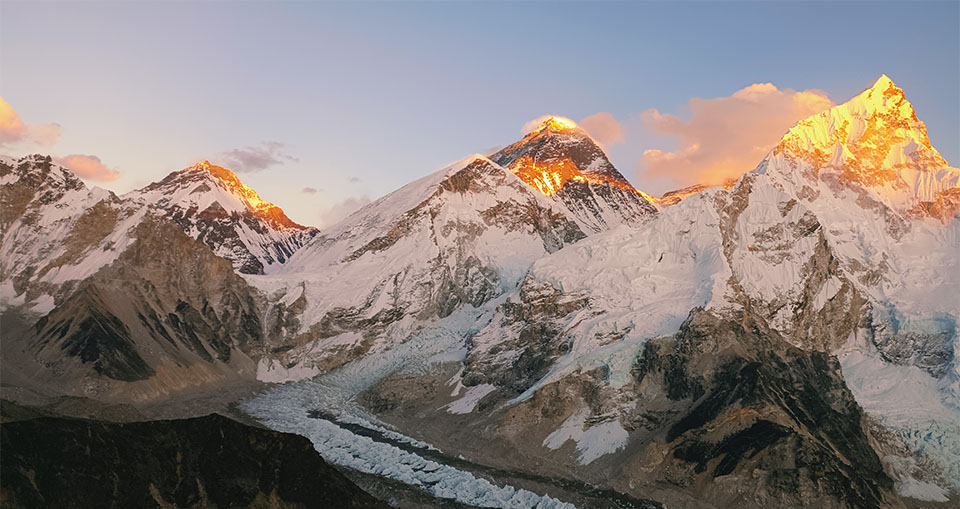
A breathtaking sunset view over Mount Everest and Nuptse from the Kala Patthar viewpoint.
The Journey Towards a Dream,
The trek to Everest Base Camp is unlike any other. From the moment you leave the bustling streets of Kathmandu, it's an adventure. The landing at Lukla's tiny airstrip is in itself a thrill, a gateway into a world where every step seems a step closer to the sky.
From Lukla, the trail meanders through a dense tapestry of landscape, each more breathtaking than the last. You hike through quaint Sherpa villages like Chheplung, Thado Kosi, Ghat, Phakding, Bengkar, Monjo, Jorsalle, and Namche Bazaar, where prayer flags billow in the wind, and the scent of yak butter lamps mingles with fresh mountain air. Namche Bazaar, the business and cultural heart of the Khumbu, is a vibrant hub of activity. Here, trekkers resupply, swap stories with other travelers, and soak up the unique atmosphere of Sherpa society, whose welcoming nature and endurance are as impressive as the mountains.
As the trek climbs, the rhododendron and pine forests give way to glacial valleys and moraines of rock. Each turn reveals a new vista: the knife-edge profile of Ama Dablam, the giant shadow of Lhotse, and the saw-toothed face of Nuptse. The bodily effort grows with each kilometer, but so does the sense of accomplishment. The altitude is a test of your endurance, the steep paths a test of your focus, and the day after day of walking a test of your patience, but each step is a treat with landscapes almost like a dream, as if nature is itself cheering you on.
You tread along the Khumbu Glacier, its blue ice crevices a bitter reminder of the sheer size of Everest. The Base Camp itself is a bustling hub of climbers preparing to make attempts at the top, their tents dotting the stony plain. To be here, surrounded by the colossal peaks and legendary Khumbu Icefall, it is impossible not to be impressed, deferential, and inspired. All hardship on the journey, the sore muscles, the thin air, the early starts, is suddenly reduced by the grandeur of this place.
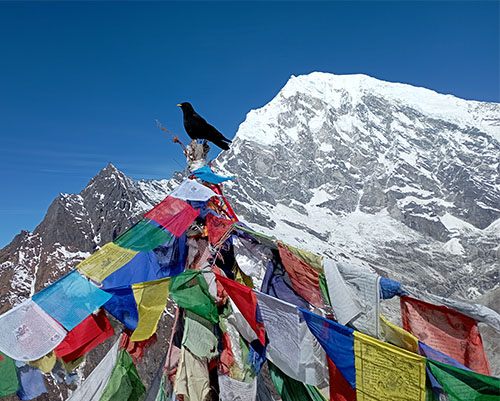
Along the way, small things make lasting impressions: the spin of prayer wheels in monastery courtyards, the free laughter of village children, the waving of rainbow-colored prayer flags against a sapphire blue horizon. It is at that moment that trekkers realize that Everest Base Camp is not a place; it is a journey of the heart, every step bringing one closer to nature and oneself.
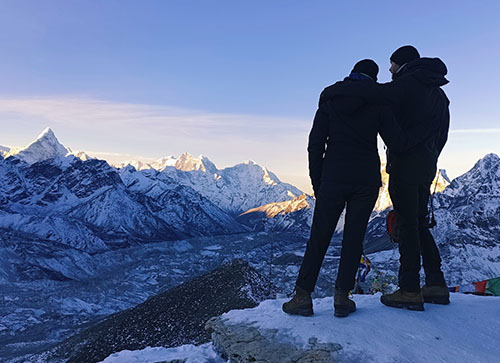
By the time you reach Kala Patthar for the first sunrise view of Everest, you've been transformed by the trek. The world's highest mountain, illuminated by golden morning sun, appears close enough to touch. And in that moment, you realize why so many adventurers from every corner of the globe undertake this trek: not only to see Everest but to feel it, to sense it, and to carry its story with them forever.
Why Everest Base Camp is More Than a Trek?
The Everest Base Camp trek has been referred to as a physical challenge, yet those who have done it will attest that it is so much more than a test of the body. Every step, every breath, and every glance up is a lesson in determination, humility, and awe. This trek is a marriage of adventure, culture, and self-discovery that makes it a once-in-a-lifetime experience that transcends usual travel.
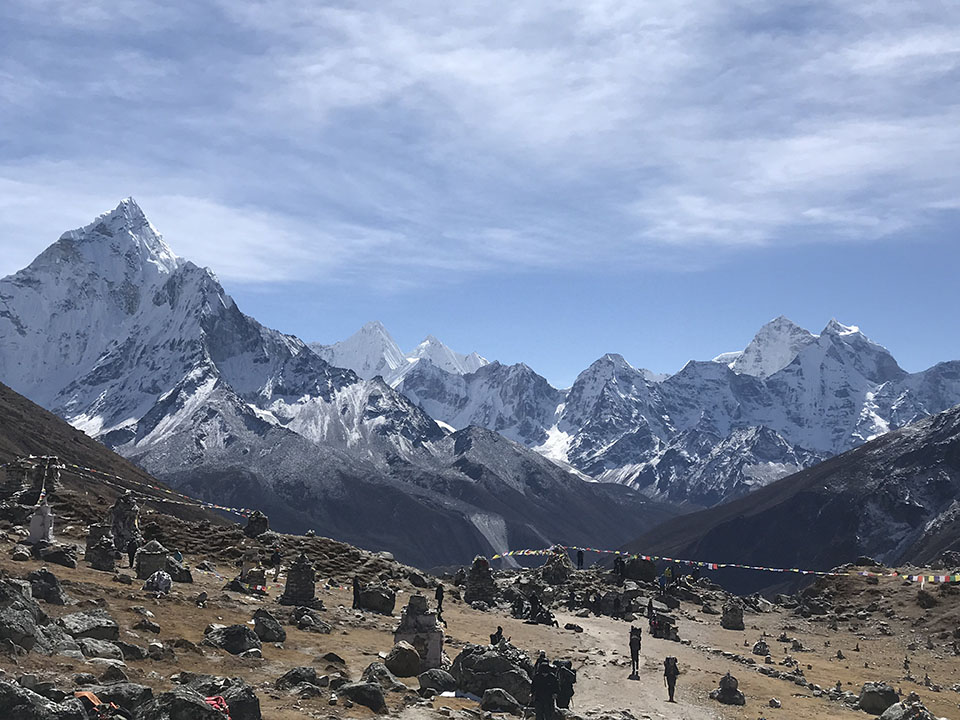
The memorials of mountaineers at Thukla Pass, located on the route to Everest Base Camp.
A Living Cultural Tapestry,
The Khumbu is home to the Sherpa, whose tradition and culture permeate each village and trail. Monasteries on hilltops, edged by fluttering prayer flags and etched murals, invite contemplation and peace. Strolling Namche Bazaar or Dingboche, one is greeted with wide smiles, mugs of butter tea, and stories of generations of individuals who live in Everest's shadow. There, one does not see culture but lives it first-hand, from festivals and bazaars of the locals to the rhythm of daily life. The trek offers a rare opportunity to learn about how tradition coexists alongside modern-day adventure tourism, and there's an opportunity to observe a living, breathing connection with the Himalayas.
Unparalleled Natural Beauty,
From verdant, close green forest in lower elevations to barren, wind-scoured valleys, the higher one ascends, the more the Everest Base Camp Trek lays bare nature in all its most dramatic extremes. Ama Dablam, Lhotse, Nuptse, and Everest summits loom over the landscape, their unobstructed proportions reminding anyone who walks through it of the infinitesimal size of their presence. The Khumbu Glacier is an alien landscape of rock and ice, and it bursts over Kala Patthar in golden light. Every vantage point gives a different one, a different tutorial in beauty, strength, and moods of change of the Himalayas.
A Test of Endurance and Resilience,
The trek to EBC is physically demanding. Altitude, long treks, and harsh environments push the body and mind. And yet it is also the conditions that make the experience transformative. Each day pushes limits, tests patience, and tests will. Climbers learn to walk steadily, adapt to new conditions, and transcend limitations they never imagined they could. To reach Base Camp is not a geographic accomplishment but an individual triumph, a tangible indication of human resilience.
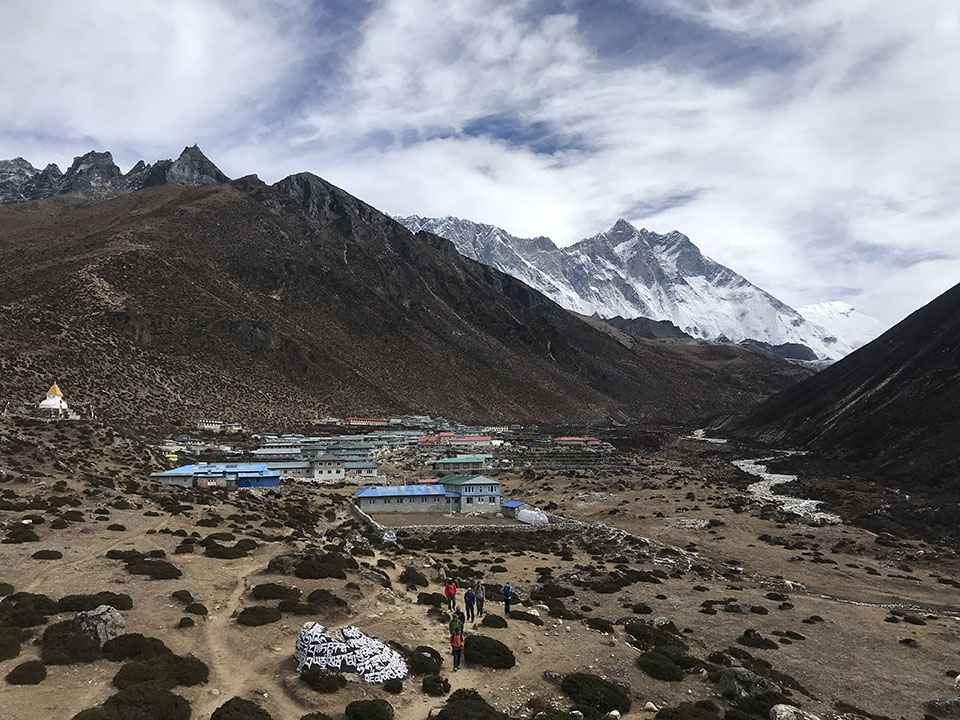
Dingboche village is set against the backdrop of Mount Lhotse, and it serves as a stop along the route to the Everest Base Camp (EBC) Trek.
Reflections and Connections,
Besides the cultural and physical journey, Everest Base Camp offers profound moments of introspection. Being surrounded by the world's highest mountain, one is reminded of individual ambitions, challenges, and the expansiveness of the world. The gentle tinkle of yak bells, the flutter of prayer flags, and the subdued hum of climbers' tents all conspire to create an atmosphere where time itself comes to a standstill, and the mind can absorb the magnitude of what is occurring. These are moments when the trek becomes magically personal, for every visitor carries away not only photographs, but memory and epiphanies that last a lifetime.
Encouraging the Dreamer Within,
For most, Everest is an ambition. Reaching its base enables any human, not only great climbers, to take advantage of that symbolism. The trek educates about living an extraordinary life, showing him or her how to be humble, patient, and willing to challenge oneself. Standing at Everest Base Camp is the memory that reminds one in a figurative and literal sense that dreams are within reach if you would but take the steps, however long and difficult they may be.
Everest Base Camp is, therefore, not so much a location; it is an experience that impacts the mind, body, and spirit. It is a trek of fear, revelation, and awe, an opportunity to come as close to humanly as possible to laying one's hand upon the peak of the sky while being secure in the world's mountains at their heights. Why Everest Base Camp is More Than a Trek.
Everest Base Camp Trek: Where Dreams Touch the Sky,
There is one moment on each Everest Base Camp trek when walking becomes more than mere exercise; it becomes a powerful emotional experience. That moment generally arrives at Kala Patthar, the ridge at 5,545 meters, where Everest dominates all the other mountains, set between the soft light of sunrise or sunset. Standing here, the world is both wide and near; the mountains appear to be timeless, but each individual struggles along the way, the long days, the high altitude, the cold mornings, burning clear in the memory of having reached this point.
To stand at the bottom of the world's highest mountain is to see a dream realized. For centuries, Everest has been a beacon of human determination, perseverance, and creativity. It has attracted adventurers, mountaineers, and hope-seekers from everywhere on the globe. But as a trekker, though, you need not reach the summit to feel that fascination. Being at Everest Base Camp itself, breathing in the pure Himalayan air, and having in sight the view of the Khumbu Icefall, the cascading glaciers, and the knife-edged peaks all around you, is enough to engender an acute sense of wonder and accomplishment.
Everest Base Camp reminds us that occasionally dreams do not require a summit. Occasionally, being at the base of what seems impossible is enough to reach for the sky. The mountains invite you to stop, look within, and celebrate not only your journey, but the infinite possibilities that lie ahead when you risk dreaming. It is where aspiration, wonder, and humility meet, taking with it all who venture there the story, the memory, and the impression of wonder which stays long after the return to the plains below.
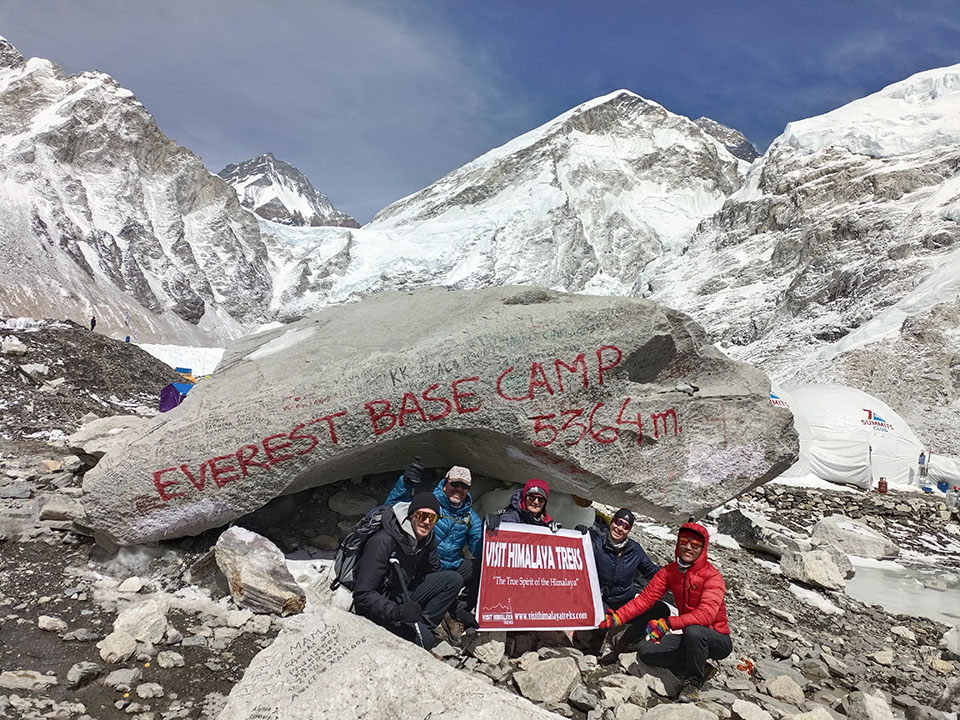
Here we are at Everest Base Camp, at an elevation of 5,364 meters, where dreams touch the sky.
Plan your Everest Base Camp Trek with the best itinerary, guided by a local expert. Visit Himalaya Treks offers a 17-day guided trek to Everest Base Camp, at an altitude of 5,364 meters, as well as to the Kala Patthar viewpoint at 5,545 meters, the highest point of the EBC trek.
Conclusion: Where Dreams Touch the Sky,
Everest Base Camp Trek is not an outing; it's a transformation. Every step on the trail, from the vibrant city of Kathmandu to the serene, wind-blasted area of the Khumbu Glacier, makes the traveler more than what he was. The mountains teach patience, the villages teach humility, and the trek teaches endurance and courage. By the time you find yourself at the foot of Everest, filling your lungs with the crisp Himalayan air, the trek reveals its final reward: a deep bond with nature, with culture, and most importantly, with yourself.
Everest Base Camp is not a destination for mountaineers; it's a pilgrimage for all those who are willing to dream, to endure, and to find. The journey transforms wayfarers into chroniclers, recalling visions of sweeping glaciers, sky-touching summits, fluttering prayer flags, and the most spectacular sunrise over the highest mountain in the world. All trekking travelers return with a transformed mentality, an enlightened mind, and a reminder that the most impossible dreams are within grasp if approached with caution, determination, and spirit.
Finally, standing at Everest's base is a moment when dreams touch the skies. A testament to the power of nature to challenge and humble us, and to inspire us, and to the power of human aspiration to pursue even the most lofty summits. If one is an adventurer, a thinker, or a looker into the sublime, Everest Base Camp offers an experience like no other, an adventure that stamps itself indelibly on both soul and imagination.