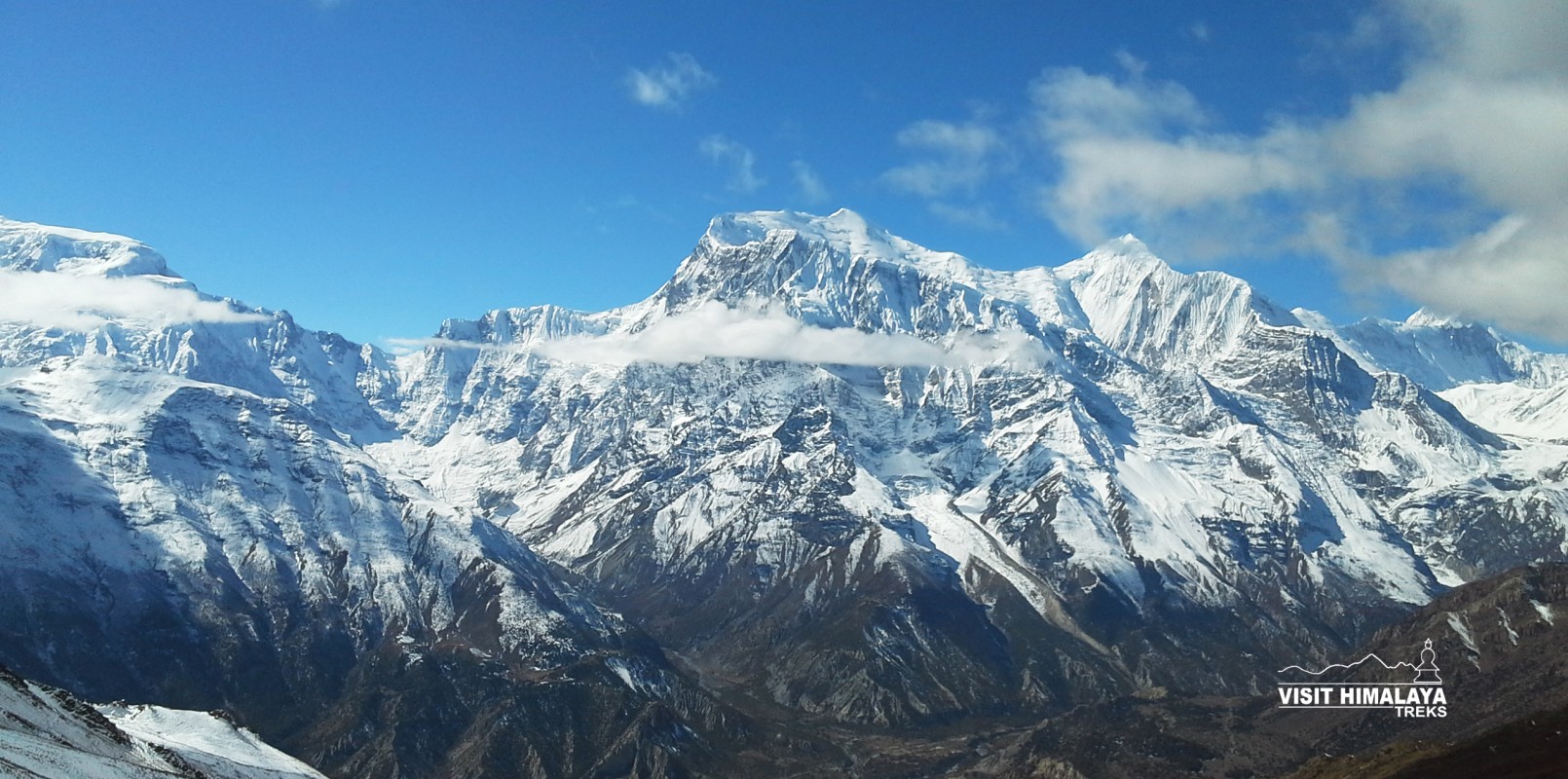
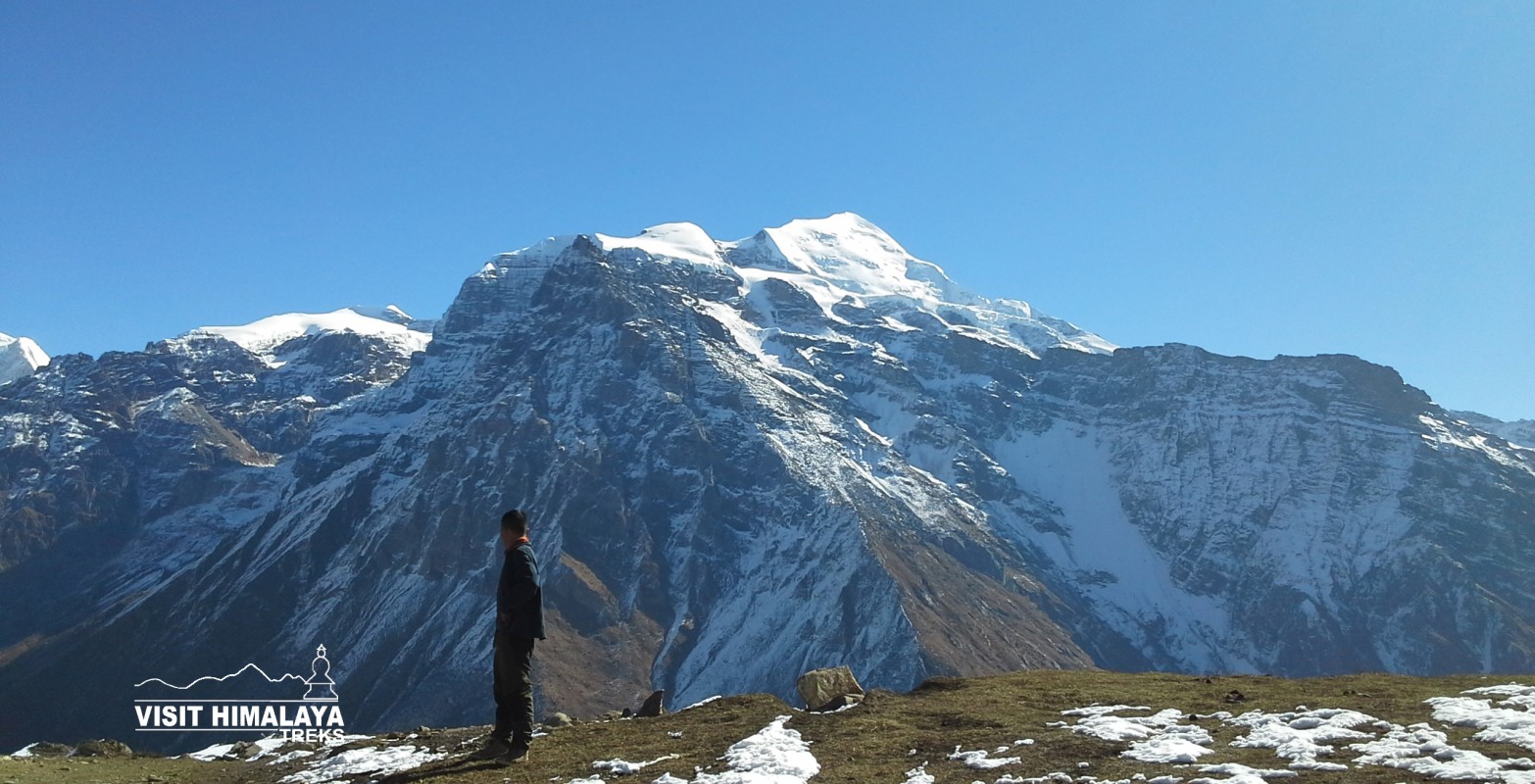
The original version of the Annapurna Circuit Trek is one of the most rewarding treks in Nepal, circling the Annapurna massif and passing through the famous Thorong La Pass at 5,416 meters.
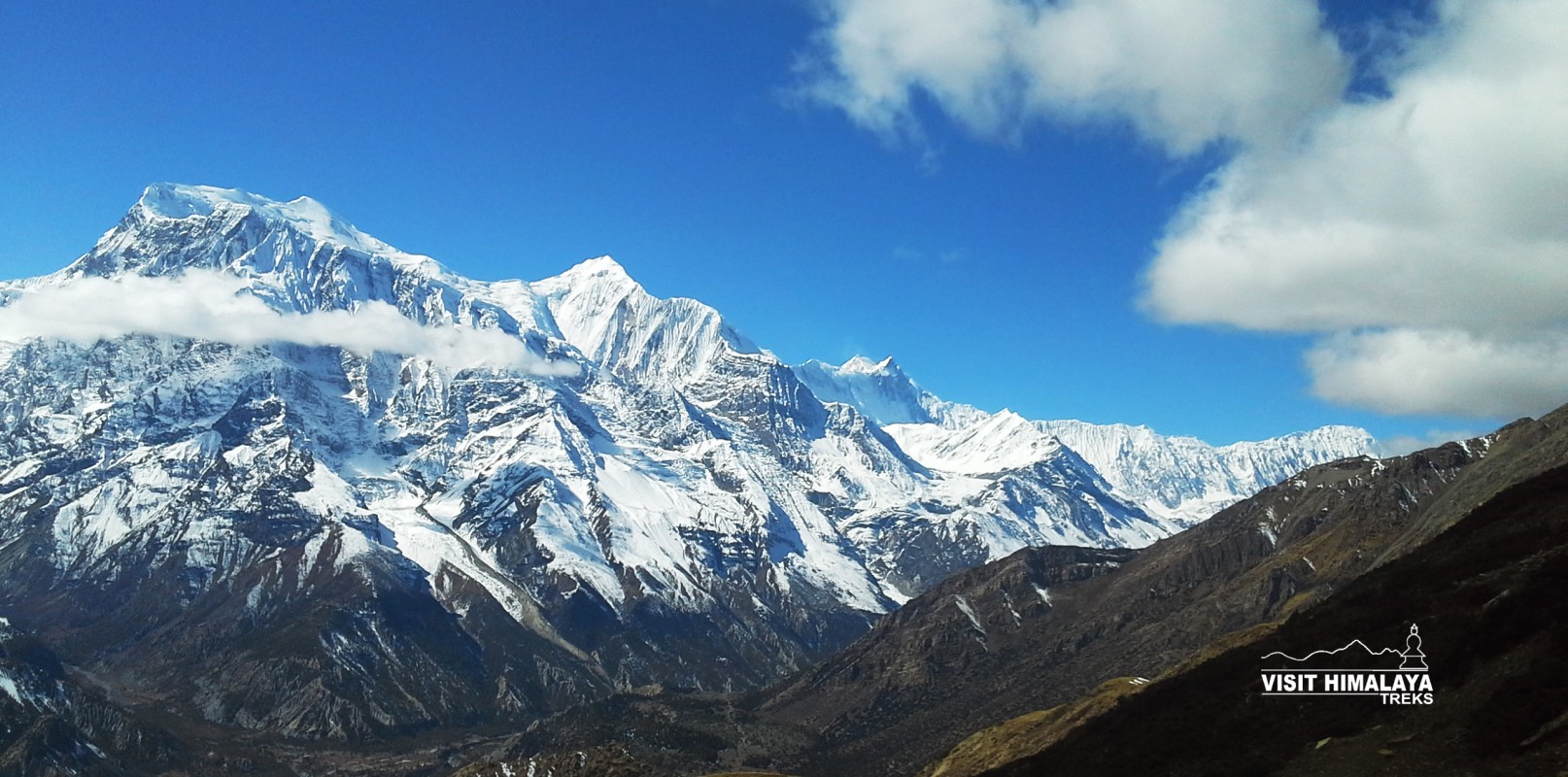
The original version of the Annapurna Circuit Trek is one of the most rewarding treks in Nepal, circling the Annapurna massif and passing through the famous Thorong La Pass at 5,416 meters. Annapurna Circuit Trek has always been famous for excellent mountain scenery, which includes varying angled views of Annapurna, Dhaulagiri, and the magnificent Nilgiri.
The highlight of the trip:
- The Annapurna Circuit, a popular hiking destination, spans 152 to 166 kilometers, circling Annapurna I (8,091 meters), the 10th highest peak in the world.
- Trek along the Marsyangdi River Valley, one of the most scenic valleys, surrounded by lush green forests, typical local villages, and breathtaking Himalayan views, making it one of the most beautiful trekking destinations in the world.
- While trekking in the Annapurna Circuit, it's a wonderful opportunity to experience local lifestyles, culture, and engage with the people, which are the highlights of the trip.
- Take a side trip to Ice Lake from Manang for one of the most iconic 360-degree views in the Himalayas. Highly recommended!
- Experience your new height at Thorong La Pass, 5,416 meters (17,769 feet). Enjoy 360-degree views from the top of the Himalayas, feeling as if you are in heaven.
- Visit the Muktinath Temple and Buddhist Monastery located in Muktinath village. Muktinath Temple is one of the most popular pilgrimage destinations in Nepal.
- The Muktinath temple offers a wonderful opportunity to experience a sacred place that everyone should visit at least once in their lifetime.
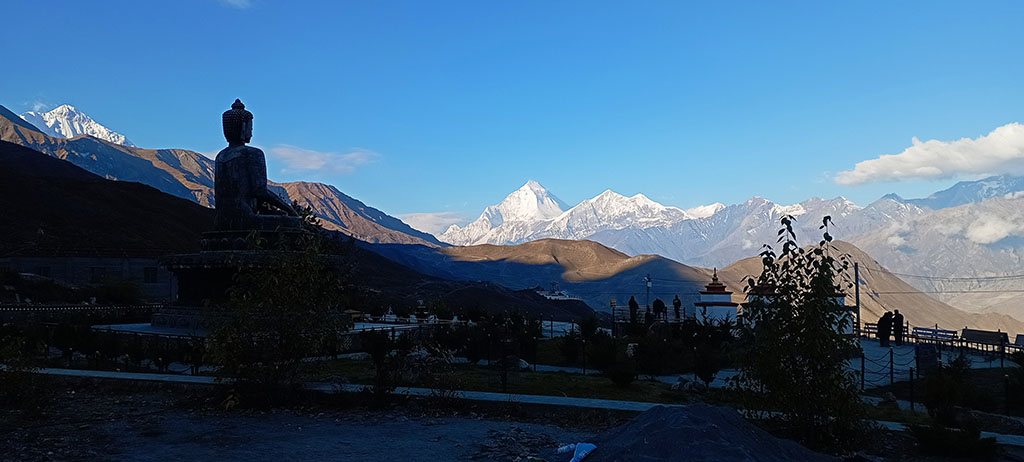
- Travel through Kali Gandaki Gorge, the world's deepest gorge, nestled between the towering peaks of Annapurna I and Dhaulagiri, both over 8,000 meters. This region is a geological wonder and a popular trekking route.
- Experience breathtaking sunrise views from the popular viewpoint of Poon Hill, overlooking Fishtail (Machhapuchhre), Hiun Chuli, Annapurna South, Nilgiri, Tukuche Peak, and Dhaulagiri.
- Experience Pokhara, Nepal, a stunning city encircled by snow-capped peaks and the enchanting Fewa Lake. This journey promises to be one of the most memorable trips of your life.
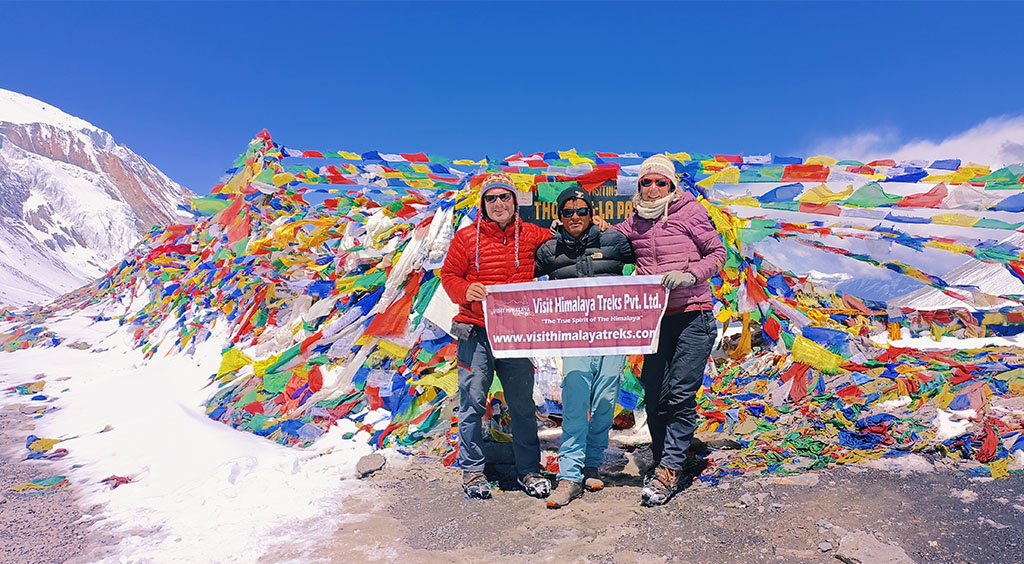
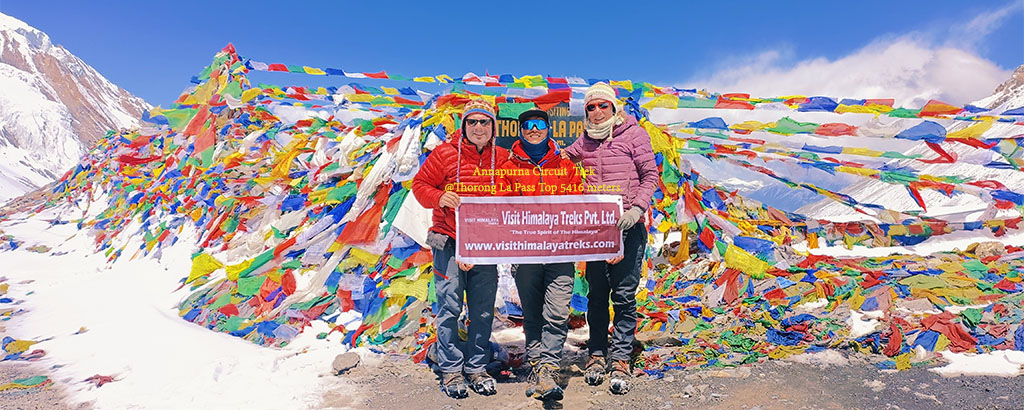
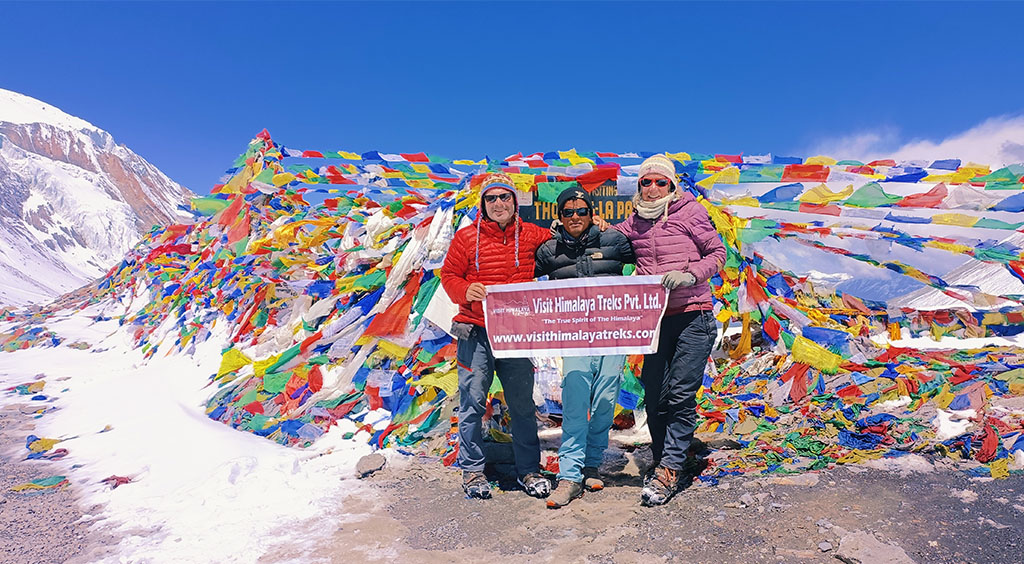
Visit Himalaya Treks group at the top of Thorong La Pass, which is 5,416 meters high, during their trek on the Annapurna Circuit.
The World's one of the most beautiful hikes around the mount Annapurna, the Annapurna Circuit Trek in Nepal.
The trek is mainly known for the way the landscapes, flora, culture, and climate zones change as the trek progresses. Fertile villages with Hindu inhabitants and terraced fields at the start are slowly replaced by arid valleys full of Buddhist stupas and mane walls during the trek. The trek also has parts with totally isolated moraines at an altitude of 5000 meters with a stunning backdrop of high cliffs and mountains.
Once, this trekking trail is one of the most popular trekking destinations in the world with diverse landscapes, vegetation, weather, and culture. A newly constructed road has shortened the trek, resulting in the trek losing its previously held charm to people visiting the region. Because of the road, instead of starting at Besisahar, people can easily drive to Chame, the administrative headquarters of Manang. However, trekking through the local villages of Upper Pisang, Gyaru, and Ngawal villages provides an opportunity to experience the Manang people's culture and lifestyle.
One of the most amazing experiences (it is a strenuous climb at an altitude above 5000 meters) of the trek is crossing the 5416 meters high Thorong La Pass. This eventful and scenic day perfectly sums up the trek as well. In a day, the trek goes from the arid valleys of the upper Manang, home of Tibetan Buddhists, down to the Hindu pilgrimage site of Muktinath, in the windy Kali Gandaki valley. Annapurna Circuit Trek offers a side trip to Ice Lake are the other exciting prospects available on this trek.
The Annapurna Circuit Trek also has a natural hot spring at Tatopani. Here, a couple of days of the trek of old days is replaced by a day's bumpy ride. But this has added a different edge to this already exciting trek. The striking views of the Annapurna and Dhaulagiri Ranges from Poon Hill provide a fitting climax to the Annapurna Circuit Trek.
Annapurna Circuit Trek Route.
The journey to the Annapurna Circuit Trek begins from Kathmandu, with a scenic drive to Dharapani. This drive takes about 9 to 10 hours by private jeep to Dharapani. We will stop overnight here at Dharapani, and the next day, our Annapurna Circuit journey will begin from here.
The Annapurna Circuit Trek route:- Kathmandu →Dumre →Besisahar →Dharapani →Timang →Koto →Chame →Bhrathang →Dhikur Pokhari →Upper Pisang →Ghyaru →Ngawal →Braka →Manang →Ice Lake →Yak Kharka →Ledar →Thorong Phedi →Thorong High Camp →Thorong La Pass →Muktinath → Kagbeni →Jomsom → Tatopani → Ghorepani → Poon Hill → Tadapani → Ghandruk Village →Pokhara →Kathmandu.
Annapurna Circuit Trek Distance.
The Original Annapurna Circuit Trek covers a distance of approximately 152 to 166 kilometers (94.4 to 103.1 miles) round trip, starting from Dharapani and ending at Ghandruk Gurung village. Each day, trekkers typically walk between 6 to 22 kilometers through the breathtaking Himalayan terrain and the scenic countryside of the Annapurna region of Nepal, specifically in the famous Manang Valley, Ice Lake, Gangapurna Lake, Thorong La Pass, 5416 meters, Muktinath, Tatopani, Ghorepani, and Ghandruk village, which are the highlights of the Annapurna Circuit Trek in Nepal.
Annapurna Circuit Trek: Daily walking distance.
While trekking to the Annapurna Circuit in Nepal, we covered a distance of approximately 6 to 22 kilometers ( 3.7 to 13.6 miles) a day. Our real walking journey starts from Dharapani, following the Timang, Koto, Chame, Bhrathang, Dhikur Pokhari, Upper Pisang, Ghyaru, Ngawal, Braka, Manang, Ice Lake, Yak Kharka, Ledar, Thorong Phedi, Thorong High Camp, Thorong La Pass, Muktinath, Kagbeni, Tatopani, Ghorepani, Tadapani, and ends at Ghandruk village.
Day by Day breakdown distance details;
- Kathmandu to Dharapani by drive about 215 Kilometers (133.5 miles)
- Dharapani to Chame Trek, 15-17km (9.3 -10 miles)
- Chame to Upper Pisang Trek, 13.9km (8.6 miles)
- Upper Pisang to Ngawal Trek, 10km (6.6 miles)
- Ngawal to Manang Trek, 10km (6.6 miles)
- Manang to Ice Lake side trip Manang hike, 16 -20km (9.8 -13.2miles)
- Manang to Yak Kharka Trek, 10-11km ( 6.1-6.8 miles)
- Yak Kharka to Thorong Phedi Trek, 6-8km (3.7 - 5miles)
- Thorong Phedi to Thorong La Pass top 5416 meters, 6km (3.1 miles)
- Thorong La Pass to Muktinath Trek, 15-16km (9.3 -9.9 miles)
- Muktinath to Kagbeni Trek 12-15km (7.4 -9.3 miles)
- Kagbeni to Tatopani driving distance 70km (43.4 miles)
- Tatopani to Ghorepani Trek 16km (10 miles)
- Ghorepani to Poon Hill viewpoint is approximately 2 km (1.2 miles)
- Ghorepani to Tadapani is about 12 km (7.4 miles)
- Tadapani to Ghandruk village is about 6-7 km (3.7 -4.3 miles)
- Ghandruk to Pokhara is about 57 km (35.4 miles)
The Original Annapurna Circuit Thorong La Pass Trek Itinerary
Day 01: Arrive in Kathmandu (1350 meters).
Day 02: Sightseeing and Trek Preparation.
Day 03: Drive to Dharapani (1860 meters) via Besisahar, about an 8-9-hour drive.
Day 04: Trek to Chame (2670 meters), about a 6-7-hour walk.
Day 05: Trek to Upper Pisang (3300 meters), about a 5-6-hour walk.
Day 06: Trek to Ngawal Via Gyaru (3660 meters), about a 6-7-hour walk.
Day 07: Trek to Manang (3540 meters), about a 7-8-hour walk.
Day 08: Acclimatization day / Side trip to Ice Lake 4600 meters, about a 6-7-hour walk.
Day 09: Trek to Yak Kharka (4050 meters), about a 4-5-hour walk.
Day 10: Trek to Thorung Phedi (4525 meters), about a 4-5-hour walk.
Day 11: Cross Thorung La (5416 meters) and Trek to Muktinath (3760 Meters), about an 8-10-hour walk.
Day 12: Trek to Kagbeni (2810 meters), about a 2-3-hour walk.
Day 13: Drive to Tatopani Nature Hot Spring (1190 meters), 3-4 hour drive.
Day 14: Trek to Ghorepani (2860 meters), about a 6-7-hour walk.
Day 15: Climb Poon Hill (3210 meters) and Trek to Tadapani (2630 Meters), about a 6-7-hour walk.
Day 16: Trek to Ghandruk (1940 meters) and Drive to Pokhara (822 meters), about a 3-4-hour walk and a 2:30 to 3:00-hour drive.
Day 17: Sightseeing in Pokhara, stay overnight in Pokhara.
Day 18: Flight to Kathmandu, transfer to the hotel, free day in Kathmandu.
Day 19: Departure. (Extension to Chitwan National Park)
Take some time to enjoy and appreciate a local culture! It’s wonderful to observe the daily lives of the people who call it home.
During our trek on the Annapurna Circuit, we will have a fantastic opportunity to observe the diverse cultures of various ethnic groups and their daily lifestyles. In the lower section of the trek, Hindu culture is predominant, whereas the upper part of the Annapurna region is influenced by Tibetan Buddhism.
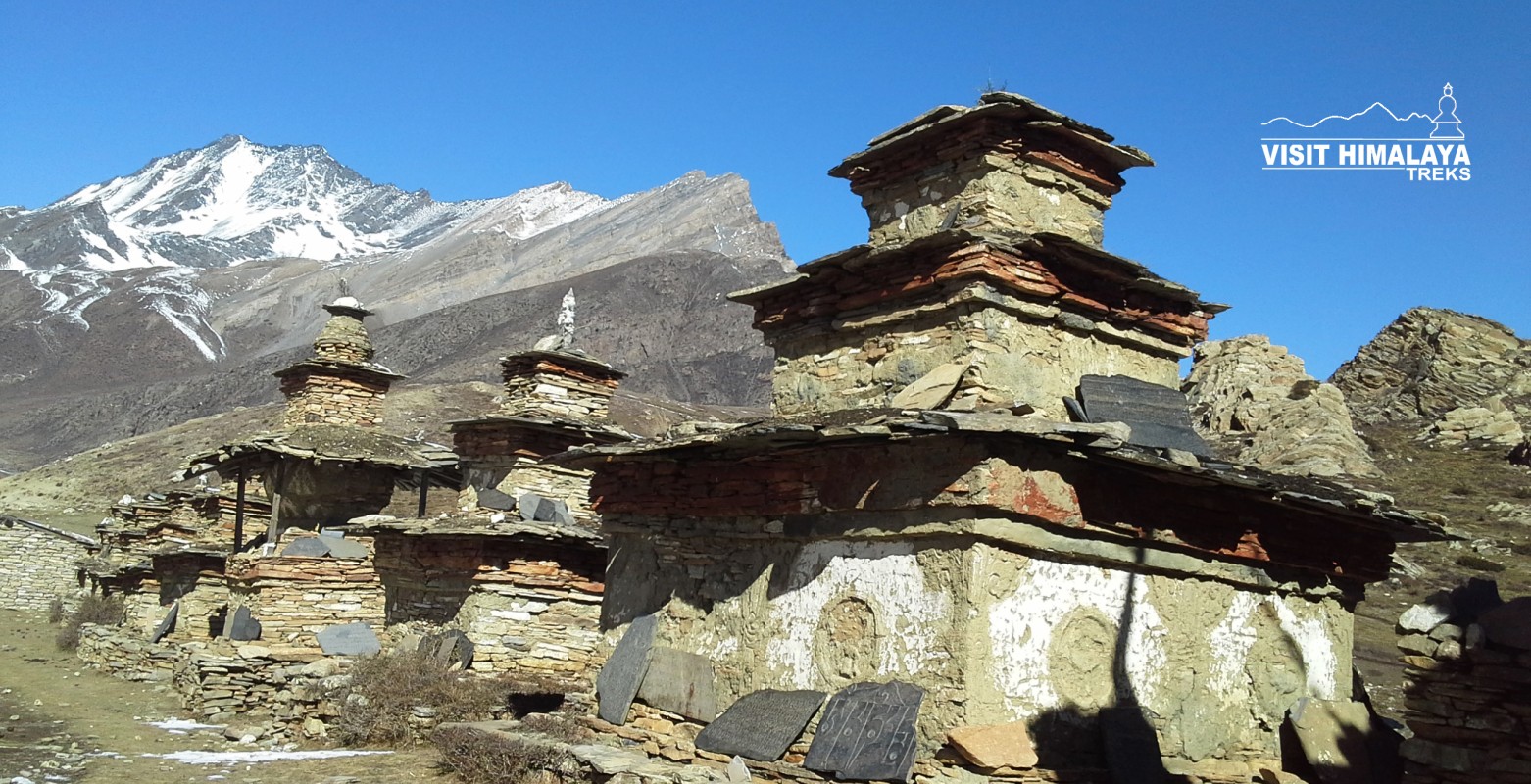
Mani wall, Buddhist Stupas, Monasteries, and colorful prayer flags present a peaceful symbol along the trekking route, such as Pisang, Guaru, Ngawal, and Manang village. Muktinath is a highly revered pilgrimage site for both Hindus and Buddhists, attracting pilgrims throughout the year who come to worship at its holy temples and monasteries.
The Manang and Mustang districts are popular for apple farming. Bhrathang in Manang and Marpha villages in Mustang are popular for apple farming, one of the biggest Apple farms en route to the Annapurna Circuit trek. Tourism, Farming, trade business, and Animal keeping, like Yaks, sheep, and Goats, are the major income sources in the region.
The standard of the local tea house on the Annapurna Circuit Trek in Nepal.
The Annapurna region is a famous trekking destination in the world, known for its warm welcome and friendly, helpful people who run well-facilitated guest houses along the Annapurna Circuit trekking route in Nepal. Some locations, such as Braga, Manang, Muktinath, Tatopani, and Ghorepani, feature luxury hotels that offer various amenities, including private bathrooms, hot showers, and heated rooms. The standards of teahouses along the Annapurna region trekking routes in Nepal are also among the best available.
Availability of food along the Annapurna Circuit Trek route in Nepal.
When trekking in Nepal, the availability of food varies significantly due to the region's remoteness, as well as the accessibility and resources available. The Annapurna Circuit Trekking route is well-known for its diverse food options, featuring a wide selection of menus at every tea house.
Breakfast Options Availability:
Oatmeal: Oatmeal served with milk and fruit is a perfect option.
Bread: Also, you can get bread or toast with jam, honey, and butter.
Chapatti: You can also have Chapatti Roti, which goes quite well in omelettes.
Omelette: Boiled, fried, and scrambled eggs are served in the guest house.
Lunch and Dinner Options Availability:
Rice Meals: Along with veg and non-veg Nepalese Dal Bhat, there’s an option for rice with curry and fried rice.
Noodles: Fried and soupy noodles are available.
Momo (Dumplings): Mo Mo is a trendy local food with different flavours, i.e., steamed, veggie, potato, etc.
Pasta and Macaroni: All kinds of plain and flavoured pasta and macaroni are excellent options for dinner.
Pizza: Chicken/ Mushroom/ Mix.
Sandwiches: Cheese/egg/ tomato/ tuna sandwich.
Burger: Burger is also a good choice for the trek.
Potato: Boiled, mashed, and fried potatoes.
Spaghetti, Pasta, and Macaroni: All kinds of plain and flavoured Spaghetti, pasta, and macaroni are excellent options for dinner.
The menu offers many other vegetarian and non-vegetarian options, but these are the most popular food items while trekking in the Nepal Himalayas.
I am a vegetarian. Is it possible to have vegetarian food trek to the Annapurna Circuit?
Many of our clients frequently ask about the availability of vegetarian food while trekking in Nepal. We want to assure you that it is indeed possible to enjoy vegetarian meals during your trek. Along the trekking route, our clients will receive a free menu, and you will have the opportunity to choose from a variety of vegetarian options available on the menu.
How can I effectively manage the drinking water during my trekking trip to the Annapurna region of Nepal?
Most trekking routes in Nepal offer the option to purchase mineral water. You can also buy boiling water at tea houses or lodges along the way. Additionally, we provide a water treatment tablet for every group to ensure safe drinking water. We suggest bringing your own water bottle to fill and carry with you along the trek.
What is the highest point we will reach on the trek to the Annapurna Circuit?
The Annapurna Circuit Trek begins from Dharapani, which is located at an elevation of 1860 meters (6102 feet). As we progress on our trek, we will steadily increase our altitude each day. Our walking journey will conclude at Ghandruk Village, which is at an elevation of 1940 meters (6364 feet). Along the way, we will reach Ice Lake at 4,600 meters (15,091 feet), and Thorong La Pass at 5,416 meters (17,769 feet). Thorong La Pass is the highest point we will reach during our Annapurna Circuit trek in Nepal.
(a) Ice Lake is one of the beautiful side trips and a viewpoint at 4600 meters (15091 feet)
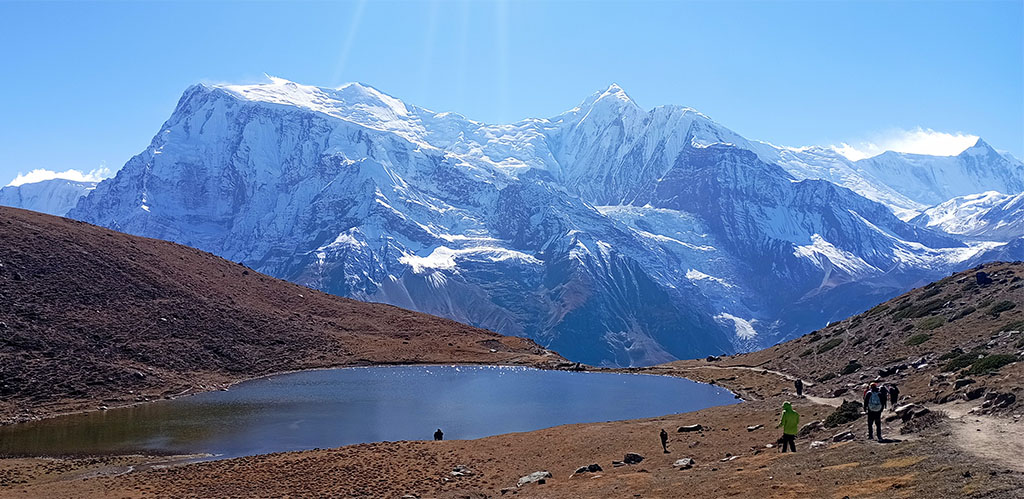
Ice Lake, also known as Kicho Tal, is located just above the top of Braga village at an elevation of 4,600 meters (15,091 feet). During your acclimatization day in Manang, we highly recommend hiking to Ice Lake for the well-acclimatized. Ice Lake offers one of the best views of the Annapurna Massif and the Marsyangdi Valley. It will take about 6 - 7 hours for a day trip to Ice Lake and back to Manang.
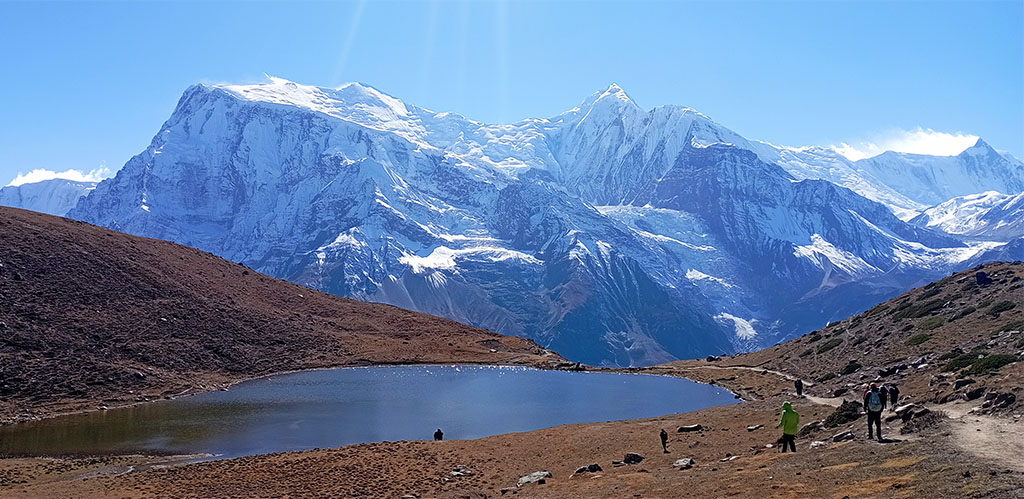
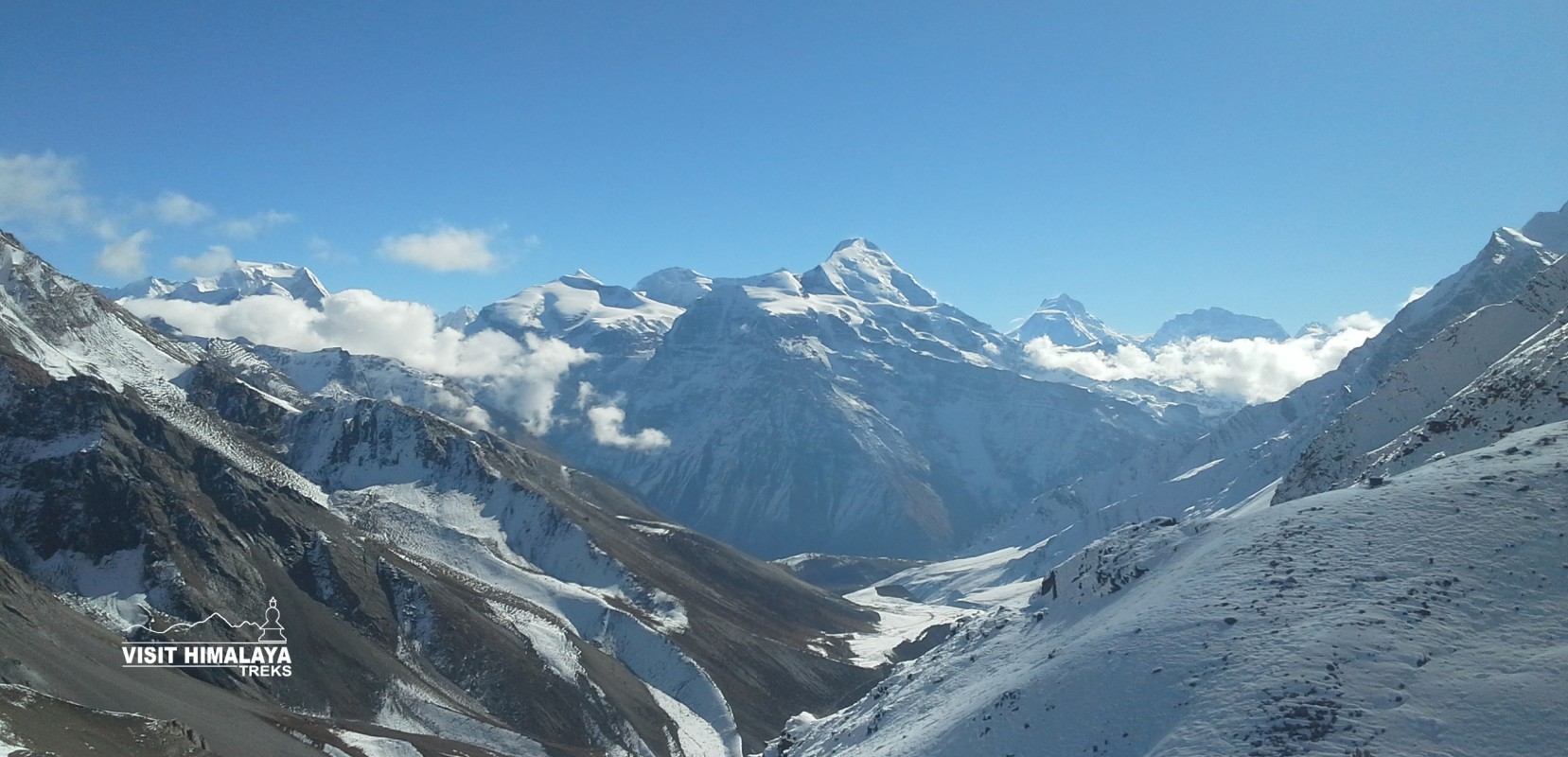
Ice Lake is situated at an elevation of 4,600 meters. It offers stunning views of the Annapurna Himalayas.
(b) The Thorang la Pass 5,416 meters (17,769 feet)
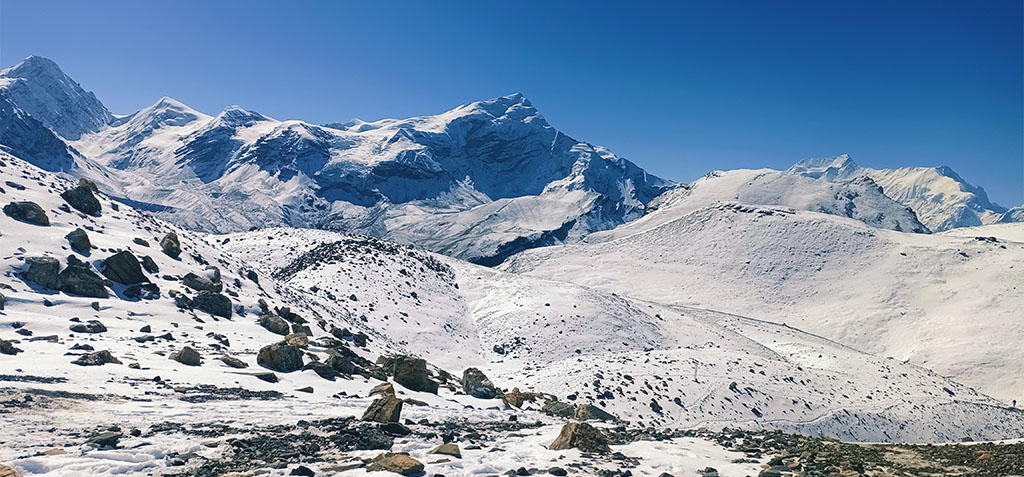
The Thorong La Pass, at an elevation of 5,416 meters (17,769 feet), marks the boundary between the Manang and Mustang districts in Nepal. It is the highest point of the trek and the tallest Himalayan trekking pass in the region. Reaching the summit of Thorong La Pass and capturing a photo to commemorate this achievement is a highlight of the journey, creating lasting memories.
How difficult is the Annapurna Circuit Trek?
The Annapurna Circuit Trek is classified as a demanding grade treks in Nepal. This journey takes you through rivers, valleys, rocky trails, and moraines, requiring long days of walking with both uphill and downhill sections. The trek reaches a high altitude, culminating at the Thorong La Pass, which stands at 5,416 meters. While it is certainly not an easy trek, it is not at the extreme end of the difficulty spectrum either.
Is the Annapurna Circuit Trek beginner-friendly?
The Annapurna Circuit Trek is a demanding trek that requires a good level of fitness. Each day, trekkers will walk a minimum of 6 kilometers and a maximum of 22 kilometers, typically spending about 5 to 8 hours on the trail. This trek is not suitable for complete beginners; however, it can be accomplished by those with good walking stamina who can manage between 5 to 8 hours of walking each day. The terrain includes uphill and downhill paths, rocky trails, moraine landscapes, and high elevations.
Is it possible to trek the Annapurna Circuit during the winter?
Trekking in winter, particularly in December and January, is a fantastic idea in Nepal as it allows you to avoid large crowds. With proper preparation and the right quality winter gear, such as a down jacket, sleeping bag, warm trousers, and sturdy trekking boots, you can successfully trek the Annapurna Circuit during the winter season.
Is it Possible to trek the Annapurna Circuit during the Summer?
Trekking in Nepal, particularly in the Annapurna region, Upper Mustang, and Upper Dolpo, takes place in a rain shadow area of the country. This means that these regions experience very little rainfall, even during the summer months. The lack of precipitation is due to the towering Himalayan range, specifically the Annapurna and Dhaulagiri mountains, which block the monsoon winds coming from the Indian Ocean.
The high peaks create a natural barrier, preventing most rain from reaching these northern valleys, which receive very little precipitation, sometimes under 300mm annually. Therefore, Annapurna Circuit with Tilicho Lake Trek, Upper Mustang Trek, Nar Phu Valley Trek, and Upper Dolpo Trek can be done during the summer time as well.
What are the required permits for the Annapurna Circuit Trek?
The Annapurna Conservation Area is the largest protected area in Nepal, covering 7,629 km² in the Annapurna Mountain range of the Himalayas. Its elevation ranges from 790 meters to the peak of Annapurna I, which stands at 8,091 meters. This conservation area spans across the districts of Manang, Mustang, Kaski, Myagdi, and Lamjung.
Established in 1985 and officially gazetted in 1992, the Annapurna Conservation Area is managed by the National Trust for Nature Conservation. We will trek through the Annapurna Conservation Area and need Annapurna conservation entry permits. All necessary permits will be arranged by Visit Himalaya Treks.
Is it possible to go on the Annapurna Circuit Trek solo?
The Annapurna Circuit trek is a well-established trekking route in Nepal, featuring a clearly marked trail and numerous tea houses and hotels along the way. It is entirely possible to trek solo on the Annapurna Circuit Trek while taking a guide and porter for safety and comfort.
When is the best time to go on the Annapurna Circuit Trek?
Taking in the breathtaking views of the Himalayas is a highlight of our trekking holidays, and having clear visibility is essential for a memorable experience. The Annapurna Circuit trek can be completed at any time of the year, each season offering a unique experience on the trail.
Autumn Season, choosing the best time from September to December during the autumn season is ideal, as the monsoon clears the clouds and haze, resulting in clearer visibility.
Spring Season, from March to May, is an excellent time to trek the Annapurna Circuit. Blooming flowers and the sound of chirping birds make the trekking trail even more beautiful during the spring season.
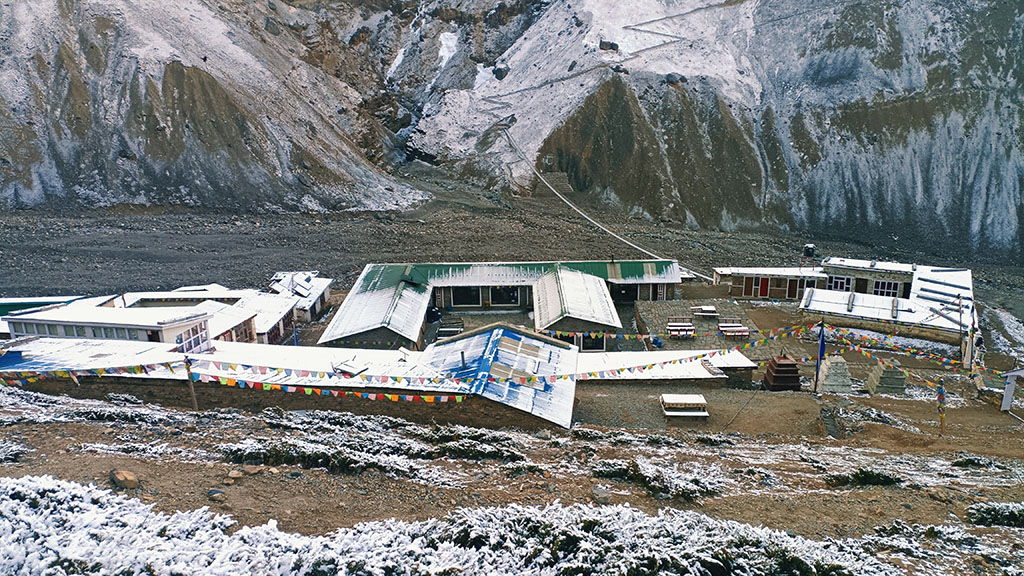
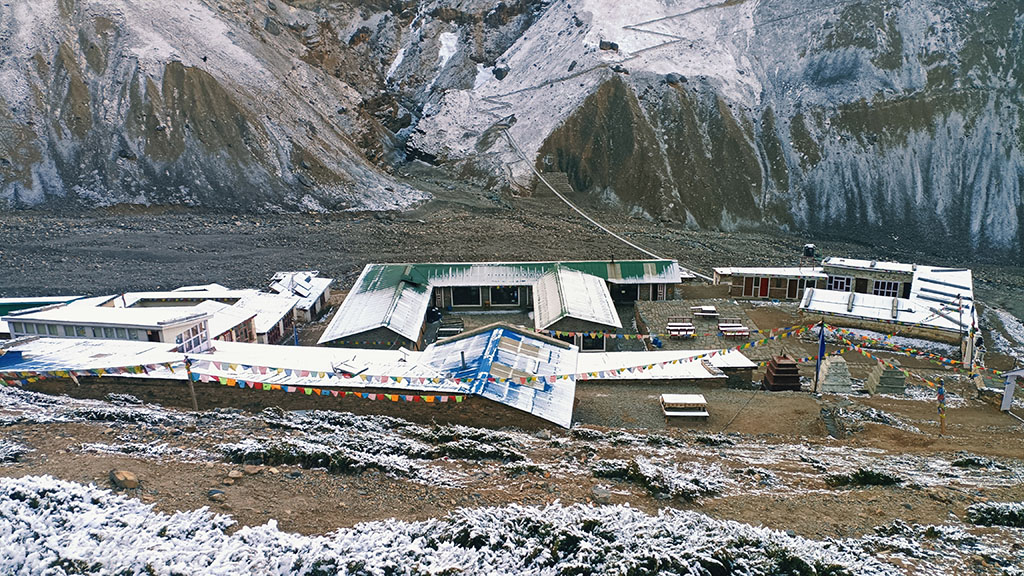
Cozy local tea houses at Thorong Phedi, located at 4,525 meters, along the Annapurna Circuit Trek.
Is a Guide and Porter mandatory for the Annapurna Circuit Trek?
The Annapurna Circuit Trek is one of the demanding trekking routes in Nepal and is also among the most popular destinations in the country. The trekking trails are well-marked, so you can trek without a guide. However, having an experienced guide can enhance your trip by helping you immerse yourself in the local culture, sharing traditions, and providing support when needed, such as the high Pass Thorong La Pass 5416 meters.
Trekking in the Himalayas of Nepal requires the proper gear to ensure a pleasant journey. Carrying heavy baggage can make your holiday less enjoyable. Hiring a porter is an excellent way to enhance your experience without the burden of demanding physical effort. Additionally, hiring a porter directly supports the local economy and helps create jobs for the community.
As an official, you will not be required to hire a guide and Porter to trek the Annapurna Circuit in Nepal.
Packing List for the Annapurna Circuit Trek.
The Annapurna Circuit Thorong La Pass Trek is one of the most demanding treks and a world-famous destination. You will need well-equipped gear for the trek to the Annapurna Circuit in Nepal. We will be spending nearly a week in a high-altitude location above 3500 meters. Therefore, we will need to prepare well-equipped gear for both hot and cold temperature conditions at high altitudes. For a complete list of essential gear required for the Annapurna Circuit Trek, please visit this link: Annapurna Circuit and Thorong La Pass Trek Essential gear list.
How much additional money should I bring?
Our 19-day Annapurna Circuit and Thorong La Pass Trek is a comprehensive package trip. It includes tea house accommodations and all meals (breakfast, lunch, dinner, as well as tea and coffee). However, you will need to budget for additional expenses such as drinking water, showers, WIFI, and extra snacks. We recommend setting aside approximately USD 15-20 per day, totaling USD 280-350 per person for these extra costs.
Tipping Culture in Nepal: Guidelines for Tipping Your Guide and Porter.
Tipping is not mandatory, but it is an appreciated gesture to thank your guides and porters. The amount you choose to tip should reflect your satisfaction, your budget, and your personal connection to your guide. We recommend budgeting 10% to 15% your total trip cost for tips, which can be distributed to your guide and Porter.
Availability of Electricity, Phone, Internet, Wi-Fi on the Annapurna Circuit Trek.
Along the Annapurna Circuit Thorong La Pass Trek, you can charge your electronic devices at local tea houses. The trekking route in the Annapurna region of Nepal is well-connected to electricity and also has solar power backups, even in areas that are not reached by the power lines.
Communication is very important, keeping updated with families, loved ones, and friends while traveling to such a remote corner of the country. While trekking in the Annapurna Circuit Thorong La Pass Trek, Local Sim NTC and NCEL both received a reasonable reception. Most of the guest houses and lodges have cable Wi-Fi and a landline phone available for any emergency call when needed.
Where should I store the extra goods that I won't need during my treks?
Kathmandu, the capital city of Nepal, is where you will stay in a comfortable 3-star hotel. We will accommodate our clients here before you begin your trek to the Annapurna Circuit Thorong La Pass Trek. At the hotel, you can store any items you won't need during the trek at no extra cost, as all hotels provide free storage facilities.
Additionally, you can leave your belongings with us at our office, and after your trek, you can easily collect them when you return.
Last-minute bookings with guaranteed departures.
The Annapurna Circuit Trek is a popular and beautiful trek located in the Annapurna Conservation Area in Nepal. We offer both solo and group treks based on your preference, even on very short notice. Once your booking is confirmed, we guarantee a 100% departure for your trip to Annapurna Circuit, regardless of whether you choose a solo or group option.
Are you still unsatisfied? Contact us to plan your Annapurna Circuit Trek itinerary.
We have created a 19-day itinerary for the Annapurna Circuit Trek, spanning from your arrival in Kathmandu to your departure, which concludes your journey to around Annapurna starting from Dharapani, Manang, Ice Lake Side trip, Thorong La Pass 5416 meters, Muktinath, Kagbeni, Tatopani, Ghorepani, Poon Hill, and Ghandruk village. If this itinerary does not suit your needs, we can customize it to better fit your preferences.
Additional days for side trips can easily be added. Please GET IN TOUCH with us to discuss your options.